
Featured BuildingThe Emory at Nashville Yards
Two buildings can look identical and be worth thousands apart — in dues, in reserves, in whether a buyer can even get a loan. Here's what to look at before you buy, sell, or trade up.
You like the lock-and-leave life, the location, the not-mowing. What you don't know yet is which buildings will cost you later — and which ones a lender won't finance at all.
Condo resale is a different job than selling a house. Your buyer pool is narrower, your competition is often in the same building, and your building's finances are now part of the sale whether you like it or not.
You know high-rise living and you know when a building has had its moment. The question is timing the sale and the purchase so you're not carrying two.
Fannie Mae and Freddie Mac retired the shortcut review that roughly 60% of condo loans used to run through. Every building over ten units now gets a full financial examination before a buyer can get a conventional loan.
Newer buildings are mostly fine. Older buildings with thin reserves are where this gets expensive — and if a building goes non-warrantable, its owners lose most of their buyer pool overnight.
Is your building affected? Let's find out →Buyers line up price per square foot across buildings as if they're interchangeable. They aren't. A fifteen-year-old building and a brand-new one are different financial instruments wearing the same clothes — and the gap usually shows up as a bill.
Neither column is the right answer. An older building with a well-funded reserve and a board that plans ahead can be a far better buy than a new one with low introductory dues. The point is that you have to actually look.
On March 18, 2026, Fannie Mae issued Lender Letter LL-2026-03 and Freddie Mac published a matching bulletin the same day. It's the biggest shift in conventional condo financing in a decade, and it rolls out in phases.
Coordinated updates to condo project standards and insurance requirements. The 50% investor concentration limit for established projects was retired — though no single entity may own more than 20% of units in a project of 21 or more.
A master property policy with a per-unit deductible above $50,000 makes a project non-warrantable. For a building carrying a high deductible to control premiums, that's a problem with real consequences.
Fannie Mae's Limited Review and Freddie Mac's Streamlined Review are retired for all conventional loan applications dated on or after this date. Previously, a buyer putting 10% or more down on a primary residence could go through Limited Review, which let underwriters skip the deep dive into association finances — and lenders used it roughly 60% of the time.
Now every project with more than ten units goes to Full Review regardless of down payment: operating budgets, reserves, special assessments, physical condition. Projects of two to ten units may qualify for an expanded waiver, but only if they're standalone and meet insurance standards.
Minimum reserve funding rises — reporting puts the new baseline at 15% of the annual budget. Buildings currently budgeting below that have a window to get ahead of it.
If a project is deemed non-warrantable, Fannie Mae and Freddie Mac won't purchase loans there, so conventional financing is off the table. Buyers can still use cash or a non-warrantable portfolio loan — at a higher rate with a larger down payment. Which means sellers in those buildings face a much smaller buyer pool. That's not a future problem. It's a today problem for anyone thinking about selling in the next few years.
One scope limit worth knowing: this applies to conventional loans. FHA, VA, and portfolio lenders run their own project approval. Which is exactly why you want a lender who knows condos involved early.
Informational only — not lending, legal, or financial advice. Individual lenders apply their own overlays on top of these baseline requirements, so eligibility varies building to building. Confirm current requirements with your lender or an HOA attorney before making decisions.
Most buyers ask about the unit. The unit is the easy part. These are the questions that decide what the next ten years cost you.
Water, trash, insurance, amenities, concierge? Two buildings with identical dues can deliver completely different value.
The single most predictive number in the building. Ask for the reserve study and the percent funded — not just the balance.
History tells you how the board operates. Pending tells you what you're about to inherit.
Caps, minimum lease terms, short-term rules. This affects your flexibility and your resale pool.
Active litigation can stop conventional financing outright, regardless of how healthy the building otherwise looks.
Roof, elevators, HVAC, plumbing, façade. Age tells you what's coming and roughly when.
Unglamorous, and the most common source of buyer's remorse. A deeded space is worth real money.
The trend matters more than the number. A building holding dues artificially low is deferring a bill, not avoiding one.
His negotiating skills were top-notch and clearly worked in our favor, securing a fantastic deal on the sale of our condo. I truly felt like I got the best price possible with current market conditions.
People compare the mortgage and stop there. The honest comparison includes everything a house quietly charges you — in money and in Saturdays.
The dues line is where people flinch, and it's usually the wrong place to flinch. Add up what a house actually costs you in a year — including the roof you're saving toward whether you know it or not — and the gap narrows more than most people expect.
Downtown Nashville isn't one market. The building you want depends less on price than on which version of the city you actually want outside your door.
The newest district in the city — 19 acres of master-planned ground still coming out of the earth. Walkability, new construction, and the most upside in downtown.
Nashville's first true walkable condo neighborhood. Established buildings, proven resale, restaurants at street level. Older stock means reserves matter more here.
South of Broadway — the arena, the convention center, the tallest towers. Big views, big amenity packages, and the most short-term-rental scrutiny.
Closest to Lower Broadway and the river. A mix of converted historic buildings and newer towers. Loud in the best and worst senses.
Vanderbilt, the hospitals, Music Row. Popular with medical and university buyers who want a short walk to work.
The most neighborhood-feeling of the six. Historic streets, serious restaurants, smaller buildings and boutique projects.
This isn't just a condo building. The Emory sits in the heart of Nashville Yards — a 19-acre district being built from scratch for the way people actually want to live downtown.
I'm on the sales team at The Emory, which means I know this building floor by floor: the layouts, the finishes, the views that are worth the premium and the ones that aren't. If you're considering it, you get someone who has walked every stack rather than someone reading the same brochure you are.
And if The Emory isn't right for you, I'll say so. There are five other districts on this page for a reason.

The best way to understand a district that's still being built is to walk it. Here's the updated tour — what's open, what's coming, and how it all connects.
Trouble playing? Watch on YouTube.
Lounges, a rooftop, a golf simulator, a dog park in the sky. This is the part of condo living that doesn't show up in price per square foot.








The quiet confidence of well-designed space. The value of walkability, security, and simplicity. You also know when a building has had its moment.
That's the conversation worth having — not whether to move, but whether your current building is positioned for the next five years. With full lender review now standard, a building's finances are part of your resale story whether or not you're ready for that.
I can tell you where your building sits, what it's likely to appraise and sell for, and what your options actually look like. No pitch, no pressure.
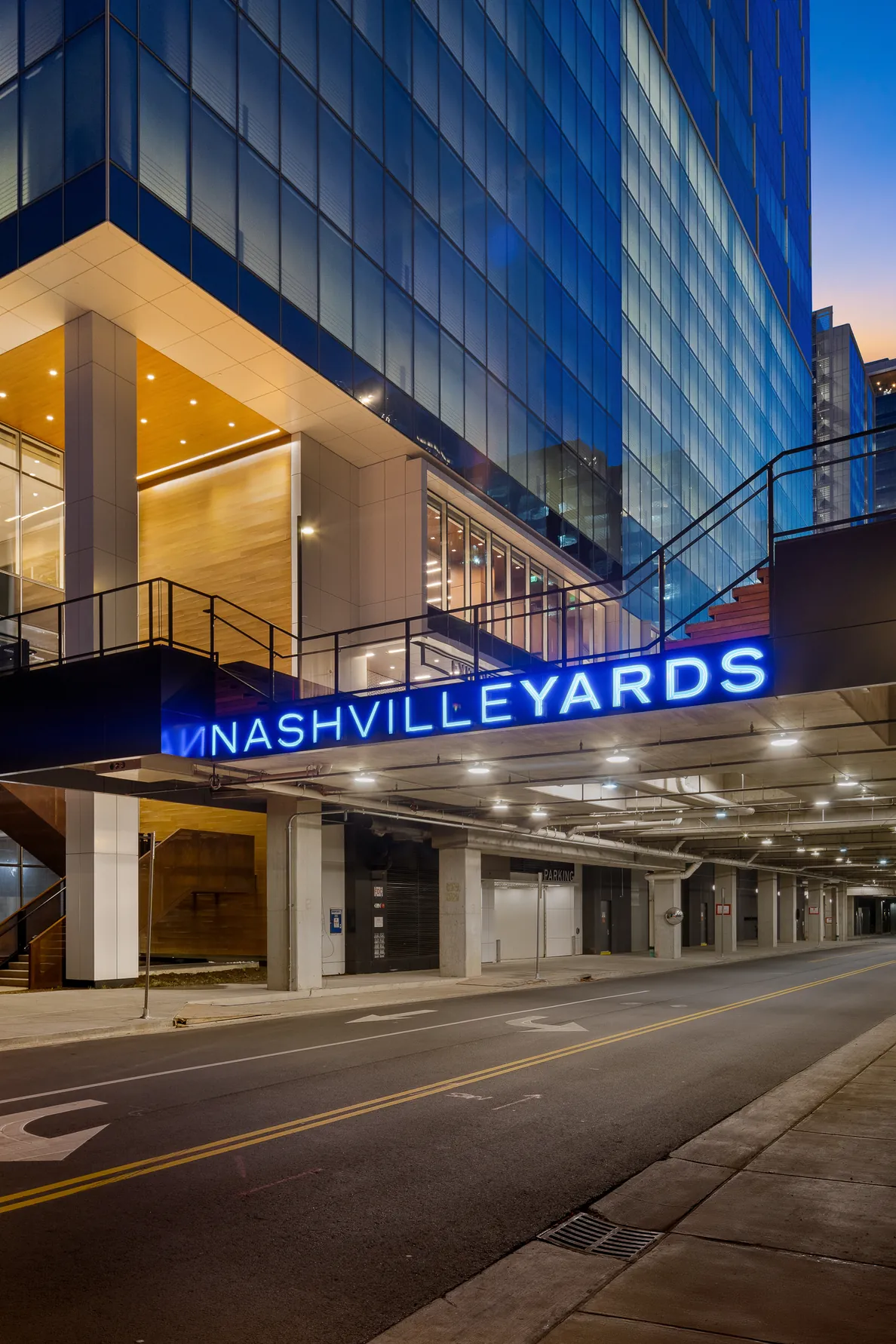
9th Avenue North at Commerce Street — walking distance to the Gulch, Lower Broadway, and everything Nashville Yards is becoming.
Buying, selling, trading up, or just want to know whether the new lending rules affect your building. Twenty minutes, no obligation.
Pick A Time →Call me at 586.747.2644
Condo valuation isn't the same as house valuation — your building's comps, dues, and financial health all move the number. Tell me where you are and I'll prepare a real one by hand.
Get My Condo Value →Email brett@urbannashville.com
Tell me where it is and I'll put together a real valuation by hand — local comps, current buyer demand, and what homes like yours are actually closing for.